Just Transition- Unravelling Counties

Ian Barlow, Sandeep Pai, Rishi Kishore, Deeksha Pande | December 2024 [Click to read the full report] Executive Summary With unprecedented amounts of money being allocated to energy transition and economic development across the country, local leaders are increasingly exploring the most effective ways to create compelling grant proposals and secure federal funding. In seeking to answer the questions of what makes some counties more successful in winning grants than others, and whether there are qualities of these counties that can be replicated elsewhere, we have conducted 13 county-level surveys in five states, held numerous conversations with local and regional leaders, and engaged in secondary research and analysis of data sourced from federal databases. Several key aspects of counties successfully securing funding have emerged thus far, including 1) the presence of an economic development director or similar in-house leader dedicated to federal grants processes and/or energy transition programs; 2) a robust financial foundation from which to draw for sufficient staffing, proposal costs, and matching funds; and 3) working relationships with federal officers and other relevant networks. Using these findings, we further illustrate the barriers preventing underserved counties in particular from finding sustained success in securing funding. We then present recommendations on ways that county leaders can strengthen economic development and energy transition efforts and on ways that federal agencies can make grant processes and funding mechanisms more inclusive and accessible.

US Work Background Report

Ian Barlow, Sandeep Pai, Rishi Kishore, Deeksha Pande | December 2024 [Click to read the full report] Executive Summary Tribes across the country have begun to explore the potential of renewable energy to drive their economies, provide both short-term and permanent jobs, and increase their energy independence. Thus far, however, tribes have depended on private sector, mostly non-Native companies to provide jobs and electricity infrastructure, so pursuing these projects on their own terms would give them a greater say in the renewable energy sector, their region economies, and the economic futures of their members. Solar power accounts for the vast majority of energy generation potential on tribal lands (50% from photovoltaic solar and 37% from concentrating solar power [CSP]) followed by wind (11%), according to the National Renewable Energy Laboratory. In total, there are around 50 million acres of tribal lands in the US, and about 6.5% of that is well-suited for at least one form of renewable energy. At a conservative estimate of 10 acres required per MW of solar energy, tribal lands have the potential to produce 325,000 MW of energy. One MW can power around 1,000 homes on average, which highlights just how great the potential of renewable energy on Native lands is. While much of this potential is untapped, there are many promising projects underway or in advanced planning stages across the country.

Coal Communities Looking Towards the Future: Case Studies of Towns and Counties in Colorado, Montana, and Wyoming

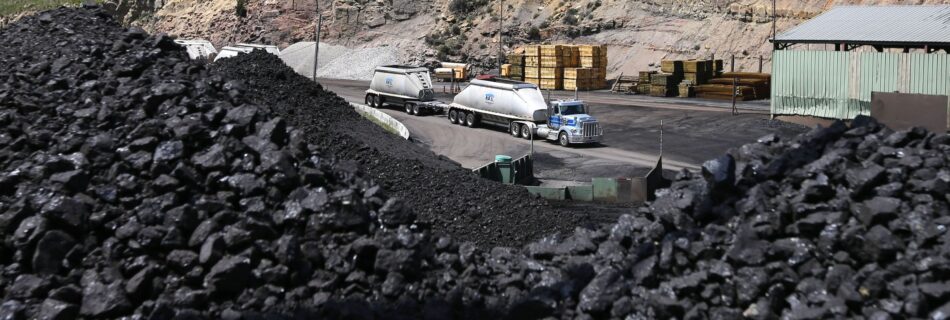
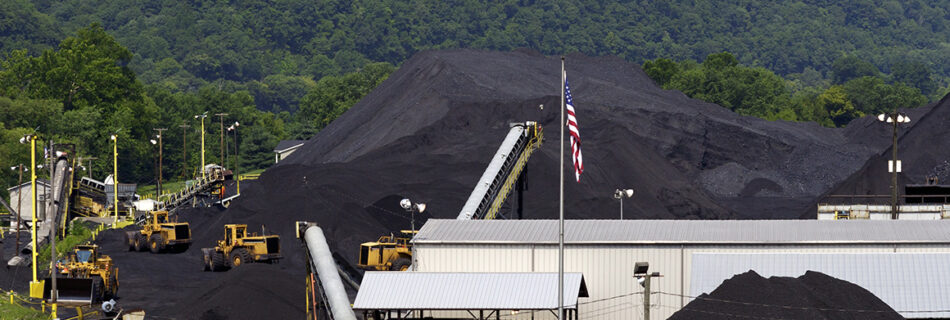
Ian Barlow, Sandeep Pai, Rishi Kishore, Deeksha Pande | December 2024 [Click to read the full report] Executive Summary Across the United States, coal mining and coal-fired power plants have been a source of economic windfall and civic pride for decades. In some communities, members of local families have worked in the mines and operated the plants for generations, so long that it has become an integral part of their identity and their family’s legacy. And while the members of these communities are no strangers to cycles of relative boom and bust, the decline of coal over the past fifteen years in particular – and its dwindling future prospects – is often seen as the most existential threat to their livelihoods yet.In 2008, 48% of electricity generated in the United States came from coal. Just 13 years later, that figure was just 22%. Federal and state policies, along with increasing public sentiment about the damaging environmental impact of fossil fuels, will see coal-fired electricity continue to decline in the coming years and decades before it eventually falls to zero. Coal communities are being forced to adapt in order to mitigate the impact of these changes, shifting their perspectives and their economies as they explore opportunities and plan for a more diverse economic future. In this paper we will present case studies of three communities in Colorado, Montana, and Wyoming, examining the importance of their coal industries, the crises that the decline of coal has precipitated, and the various avenues that committed local leaders are using to lead their communities through change and uncertainty to growth and sustainability.

Economic Diversification of Coal Communities

Aaratrica Kashyap and Shefali Sharan | July 2024 [Click to read the full report] Executive Summary Coal production and consumption are under pressure worldwide. This pressure islargely due to the need to address climate change, or concerns about coal’s economic viability, or both. In the United States, coal production has fallen by 47% since 2001 owing in large part to competition from natural gas and renewables.In India, a commitment to coal phase-down has been made, but its production and consumption continue to grow rapidly to meet development needs—conservative estimates put annual coal production at 1.3 billion tons by 2030, i.e. a 300 million ton increase in current production levels. Addressing climate change successfully may require shuttering hundreds of coal mines and power plants globally, affecting coal-reliant communities on an unprecedented scale. For these communities, managing the sector’s decline is an enormous—and often existential—undertaking. To address this challenge, policymakers and scholars worldwide have proposed and enacted frameworks and mechanisms for a ‘just transition’ of coal-reliant communities, to mitigate the economic losses of coal decline. Diversification of coal-dependent economies is a goal often included in these just transition proposals meant to reduce coal dependencies and create more local economic resilience.